Kasper Karup Kasper Karup
Home Capacity Under Pressure Sleep As Foundation Book a conversation
The day side

Capacity Under
Pressure™

Keeping access to empathy and decision-making when the load is highest.

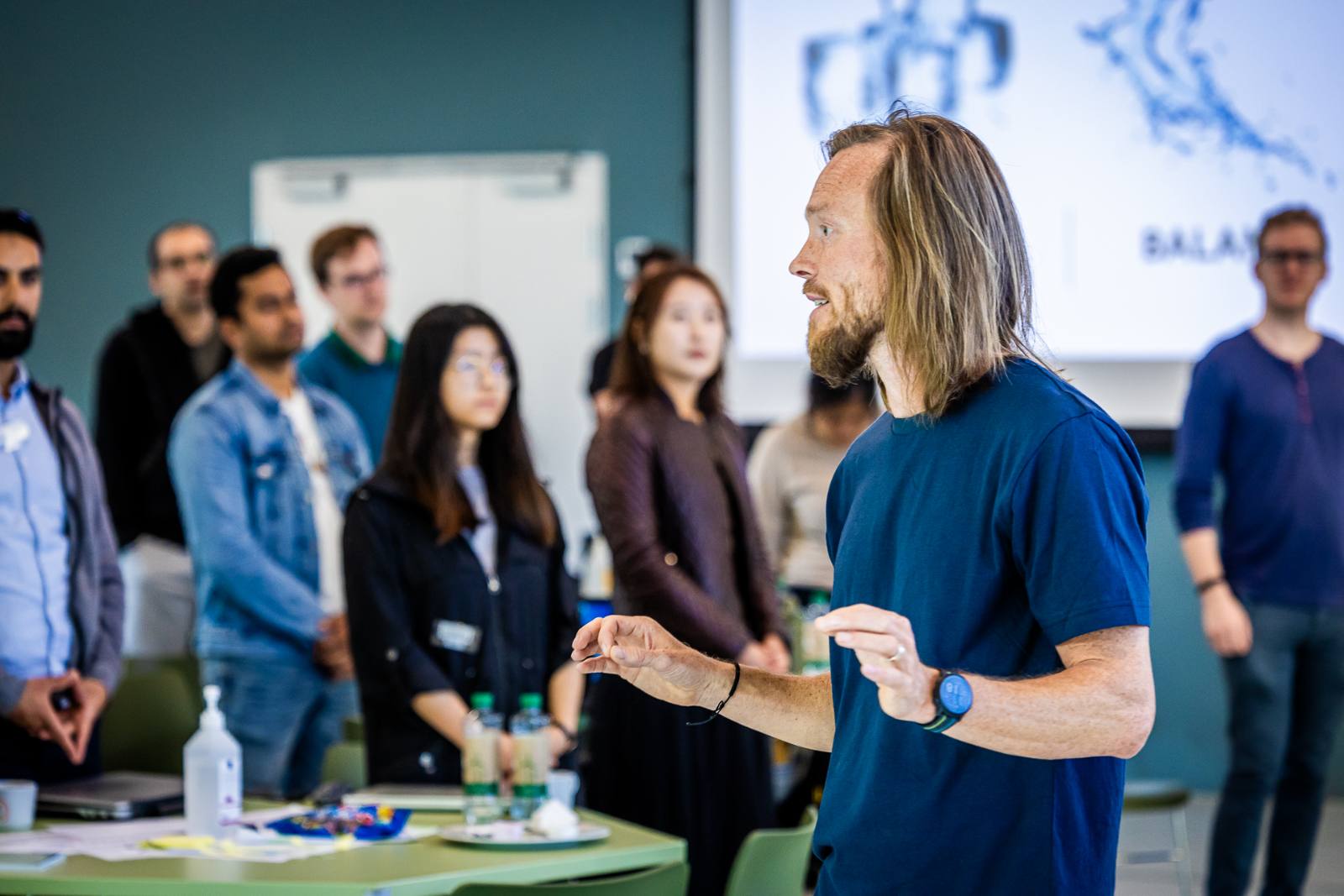
Leadership group mid-session, pressure visible – wide crop
3 reactive hijacks

Automatic. Invisible. Not a character flaw – the nervous system taking over when pressure passes capacity.

SNAP → rushed, sharp, cuts it short (FIGHT) AVOID → postpones, holds back, says nothing (FLIGHT) SHUTDOWN → withdrawn, closed off, checked out (FREEZE)
What it is

Two models. One tool.

Body first, always. You cannot think your way out of stress while the nervous system is in survival mode.

Model one The Iceberg Where the explanation actually sits: story on top, autopilot in the middle, state underneath. Culture tries to fix the top. We start at the bottom.
The Iceberg illustration
Behaviour What we say and do.
Autopilot Blaming, over-controlling, sarcasm, checking out.
Physiology Sleep and nervous system. Drives the patterns above it.
Model two Window of Tolerance Every zone here is necessary – high performance and active down-regulation are both normal, useful states. The problem is only staying too long: push too far up or down, and it tips into an automatic Hijack – SNAP, AVOID or SHUTDOWN.
Window of Tolerance, Kasper's own gradient model
Hijacked: SNAP / AVOID Too far into the red, for too long.
High performance Where most leaders run day to day. Sharp, on, productive.
Your Window of Tolerance Baseline. Clear thinking, access to decision-making.
Active down-regulation Deliberate recovery – winding down on purpose.
Hijacked: SHUTDOWN Too far into the blue, for too long.
The tool

Check-in. Baseline. Shift.

The models explain it. This is what you do about it – mid-meeting, mid-conversation, mid-decision, with nobody in the room noticing.

2 1 3 PROTECT Baseline Check-in NOTICE Shift REGULATE
1 Notice. Where am I right now – before I act.
2 Protect. Remove the interference and return to functional neutral – the point you can move from.
3 Regulate. Match the state to the task – deliberately, never reactively.
Full-bleed: leader mid-decision under load – wide crop
Basic training

Not the advanced module. The one that should have come first.

Basic training in how a human being actually works under pressure – the layer every other course was built on top of.

How it runs

Four phases, one continuous line.

High impact, low organisational burden. The phases are fixed. Scope, depth and format are set together.

01 Prepare Context, goals and scope with the people responsible.
02 Diagnose A short baseline questionnaire – and individual interviews on deeper engagements.
03 Core course Sessions with work in between, so it lands in everyday practice.
04 Follow up Some months on we measure again, and the organisation gets a debrief on what moved.
Measured, not assumed

We measure before. We measure after. Then we tell you what moved.

The same questions before we start and once the course has settled. You get a written debrief on what moved – and on what didn't.

What they say
Portrait of Lars Christian von Gersdorff, round crop

“Both I and my leadership team have been very satisfied with the course. It has been an eye-opener on many levels.”

Lars Christian von Gersdorff, Vice President, AGC Biologics
Portrait of Anne-Mette Hoff, round crop

“I sat in myself, which I rarely do – I run a lot of these. It was just that good. Very credible, grounded in solid evidence, and still made simple.”

Anne-Mette Hoff, Chief Consultant, IDA
Before you ask

Questions people ask.

Is this relevant for us? If your people make decisions, run difficult conversations or lead others while the load is high, it is relevant. If nothing is ever urgent, it is not.
Does it get too personal? No one is asked to share anything private. The work is on state and behaviour at work – not on history, feelings or diagnosis.
Will it be seen as soft? It is the opposite of soft. Physiology, evidence and three concrete tools, aimed at decision-making and collaboration. Rooms that expect fluff are usually surprised.
Does it create extra work? Sessions plus short practice in between. No homework, no platform to maintain, no reporting burden on your side.
For
Leadership groups, specialist teams or whole departments – anywhere decision-making under pressure is the work.
Language
Danish or English.
Investment
Priced per engagement, based on the number of people involved.
Get in touch A conversation first. A proposal after.

Kasper Karup Kasper Karup Home
The day side

Capacity Under
Pressure™

Keeping access to empathy and decision-making when the load is highest.

Leadership group mid-session, pressure visible – wide crop
3 reactive hijacks

Automatic. Invisible. Not a character flaw – the nervous system taking over when pressure passes capacity.

SNAP → rushed, sharp, cuts it short (FIGHT) AVOID → postpones, holds back, says nothing (FLIGHT) SHUTDOWN → withdrawn, closed off, checked out (FREEZE)
What it is

Two models. One tool.

Body first, always. You cannot think your way out of stress while the nervous system is in survival mode.

Model one The Iceberg Where the explanation actually sits: story on top, autopilot in the middle, state underneath. Culture tries to fix the top. We start at the bottom.
The Iceberg illustration
Behaviour What we say and do.
Autopilot Blaming, over-controlling, sarcasm, checking out.
Physiology Sleep and nervous system. Drives the patterns above it.
Model two Window of Tolerance Every zone here is necessary – high performance and active down-regulation are both normal, useful states. The problem is only staying too long: push too far up or down, and it tips into an automatic Hijack – SNAP, AVOID or SHUTDOWN.
Window of Tolerance, Kasper's own gradient model
Hijacked: SNAP / AVOID Too far into the red, for too long.
High performance Where most leaders run day to day. Sharp, on, productive.
Your Window of Tolerance Baseline. Clear thinking, access to decision-making.
Active down-regulation Deliberate recovery – winding down on purpose.
Hijacked: SHUTDOWN Too far into the blue, for too long.
The tool

Check-in. Baseline. Shift.

The models explain it. This is what you do about it – mid-meeting, mid-conversation, mid-decision, with nobody in the room noticing.

2 1 3 PROTECT Baseline Check-in NOTICE Shift REGULATE
1 Notice. Where am I right now – before I act.
2 Protect. Remove the interference and return to functional neutral – the point you can move from.
3 Regulate. Match the state to the task – deliberately, never reactively.
Full-bleed: leader mid-decision under load – wide crop
Basic training

Not the advanced module. The one that should have come first.

Basic training in how a human being actually works under pressure – the layer every other course was built on top of.

How it runs

Four phases, one continuous line.

High impact, low organisational burden. The phases are fixed. Scope, depth and format are set together.

01 Prepare Context, goals and scope with the people responsible.
02 Diagnose A short baseline questionnaire – and individual interviews on deeper engagements.
03 Core course Sessions with work in between, so it lands in everyday practice.
04 Follow up Some months on we measure again, and the organisation gets a debrief on what moved.
Measured, not assumed

We measure before. We measure after. Then we tell you what moved.

The same questions before we start and once the course has settled. You get a written debrief on what moved – and on what didn't.

What they say
Portrait of Lars Christian von Gersdorff, round crop

“Both I and my leadership team have been very satisfied with the course. It has been an eye-opener on many levels.”

Lars Christian von Gersdorff, Vice President, AGC Biologics
Portrait of Anne-Mette Hoff, round crop

“I sat in myself, which I rarely do – I run a lot of these. It was just that good. Very credible, grounded in solid evidence, and still made simple.”

Anne-Mette Hoff, Chief Consultant, IDA
Before you ask

Questions people ask.

Is this relevant for us? If your people make decisions, run difficult conversations or lead others while the load is high, it is relevant. If nothing is ever urgent, it is not.
Does it get too personal? No one is asked to share anything private. The work is on state and behaviour at work – not on history, feelings or diagnosis.
Will it be seen as soft? It is the opposite of soft. Physiology, evidence and three concrete tools, aimed at decision-making and collaboration. Rooms that expect fluff are usually surprised.
Does it create extra work? Sessions plus short practice in between. No homework, no platform to maintain, no reporting burden on your side.
For
Leadership groups, specialist teams or whole departments – anywhere decision-making under pressure is the work.
Language
Danish or English.
Investment
Priced per engagement, based on the number of people involved.
Get in touch A conversation first. A proposal after.

build v24